
| Home | Research | Techniques | Team | Papers | Lab openings | Resources | Contact |
|
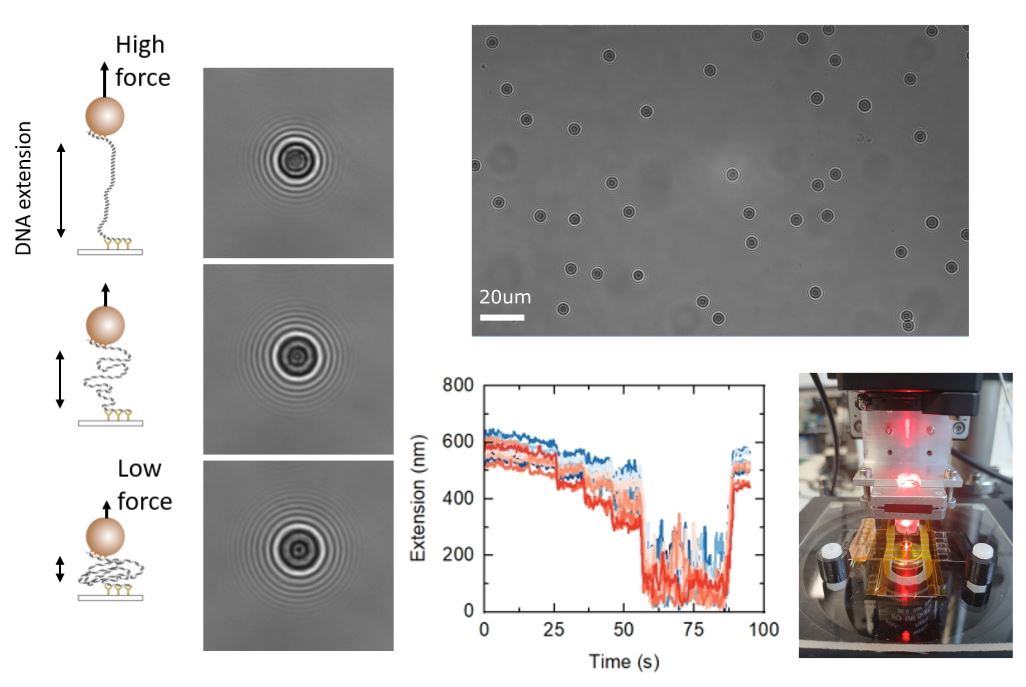
Force spectroscopy We develop and apply a single-molecule force spectroscopy method called magnetic tweezers. In this approach, small magnetic beads are attached to biomolecules and their structural response is measured upon application of controlled forces and torques. Our lab has custom-built microscopes which allow us to simultaneously measure hundreds of molecules, such as DNA, at nanometre resolution over a force range of 0.1 to 100 picoNewtons. We also use nanopore technology for detecting nucleic acid structures and their interactions with proteins and small molecules. |
 |
|
S
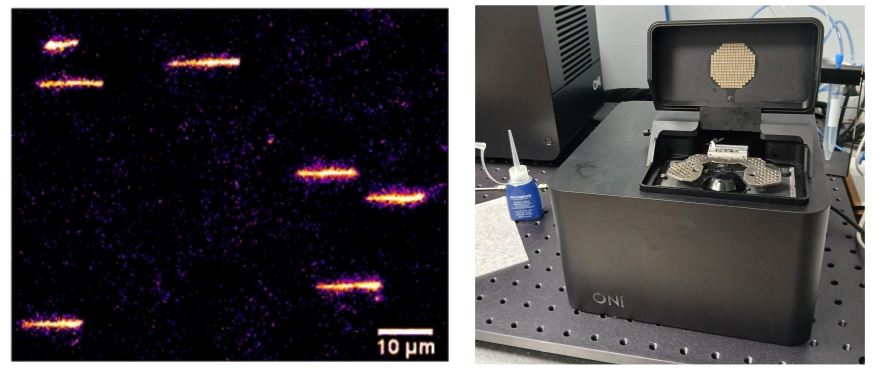
We use single-molecule fluorescence
microscopy to study the interactions of fluorescently labelled DNA and
proteins. By attaching DNA to a glass coverslip, we can image the motion
of DNA binding proteins, to understand more about their
interaction kinetics and the molecular structures they form. We have
access to a variety of optical microscopes at the LMCB light microscopy facility
including an ONI imager for single-molecule fluorescence tracking and
FRET measurements. |
 |
| Wet lab
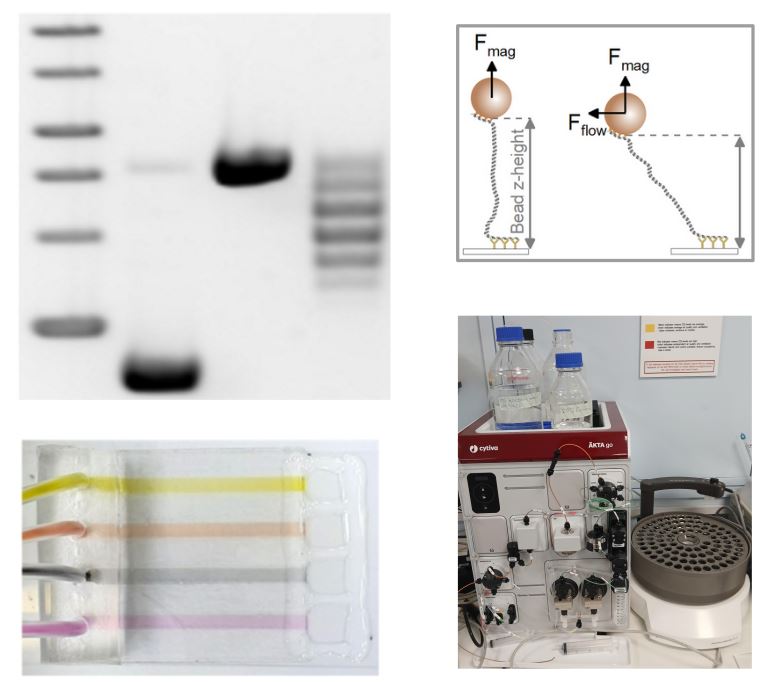
and microfabrication facilities We have a variety of systems for protein purification and DNA assembly. These include fast protein liquid chromatography (AKTA) and real-time gel electrophoresis systems. We also engineer fluidic devices to support our measurements using microfabrication and 3D printing. |
 |
