Our areas of expertise
Current projects
Protein Structure and Dynamics
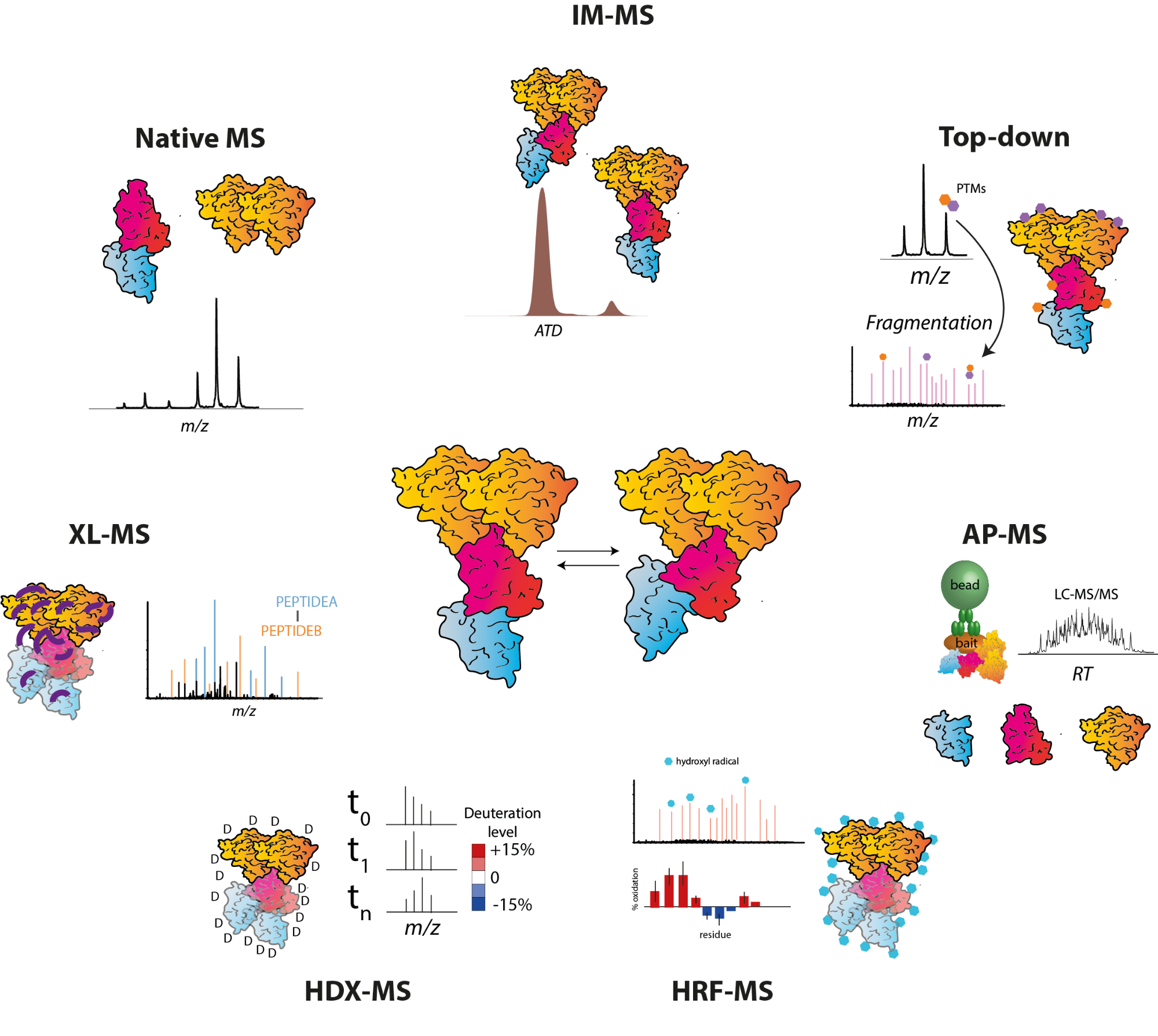
Modern protein prediction methods using deep neural networks can now achieve extremely accurate results when predicting protein structures from the protein's sequence. Despite this impressive achievement these approaches still struggle to predict the structure of flexible proteins, also known as intrinsically disordered proteins (IDPs) which comprise 30% of the human proteome, and those where a single folded state does not represent the majority conformation. They have also not so far tackled large multiprotein complexes which are often the major players within the cell. By contrast, structural mass spectrometry approaches (MS), and in particular ion mobility-mass spectrometry and crosslinking mass spectrometry, can probe the dynamic conformational landscape of proteins and proteins in complex with other molecules. In addition to in vitro studies, these approaches have recently been used to study the structure and dynamics of proteins on a proteome-wide scale and in their cellular environment. Combined with more established quantitative proteomics workflows, these analyses hold great promise in revealing the true behaviour and interactions of proteins within cells.
Integration of Mass Spectrometry Data for Structural Biology Britt, H. M., Cragnolini, T. and Thalassinos, K. Chemical Reviews (2022) 122:7952-7986
Learn more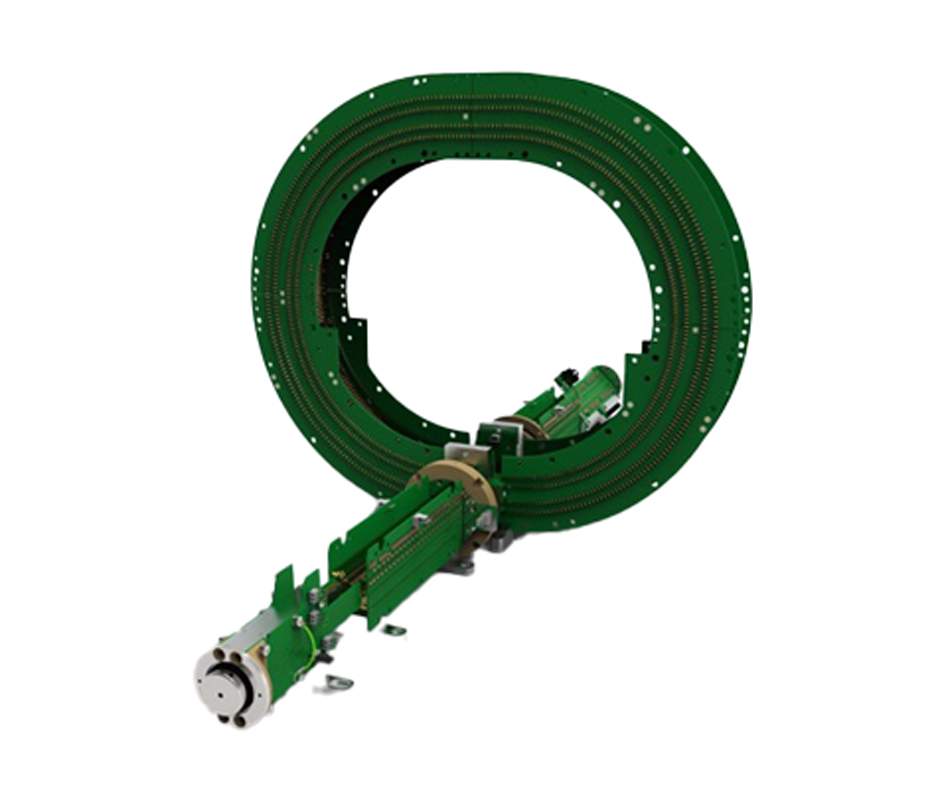
Ion Mobility Mass Spectrometry
Ion mobility mass spectrometry (IMMS) is a powerful analytical technique that is increasingly being used in the field of structural biology. Ion mobility separates ions according to shape and allows the study of conformational changes in biological systems that are not amenable to analysis by more established biophysical methods. When coupled to mass spectrometry, ion mobility allows one to distinguish between co-existing forms of a protein, which cannot easily be achieved by other approaches. Recently, we have started using a cyclic ion mobility mass spectrometer (cIMMS) and have shown how it can be used to study protein structure and probe in much finer detail protein unfolding pathways.
Behavior in the Gas Phase. Eldrid, C., Ben-Younis, A., Ujma, J., Britt, H., Cragnolini, T., Kalfas, S., Cooper-Shepherd, D., Tomczyk, N., Giles, K., Morris, M., Akter, R., Raleigh, D., Thalassinos, K. J Am Soc Mass Spectrom (2021) 32, 1545-1552
Gas Phase Stability of Protein Ions in a Cyclic Ion Mobility Spectrometry Traveling Wave Device. Eldrid, C., Ujma, J., Kalfas, S., Tomczyk, N., Giles, K., Morris, M., Thalassinos, K. Analytical Chemistry (2019) 91, 7554-7561
Developments in tandem ion mobility mass spectrometry Eldrid, C., Thalassinos, K. Biochem Soc Trans (2020) 48, 2457-2466