ExoMol
group
aims to provide comprehensive data on molecular opacities important for modelling atmospheres of exoplanets and cool stars.
ExoMolis a variational program and method for accurate and efficient calculations of rovibrational energies and spectra of general polyatomic molcules.

aims to provide comprehensive data on molecular opacities important for modelling atmospheres of exoplanets and cool stars.
ExoMol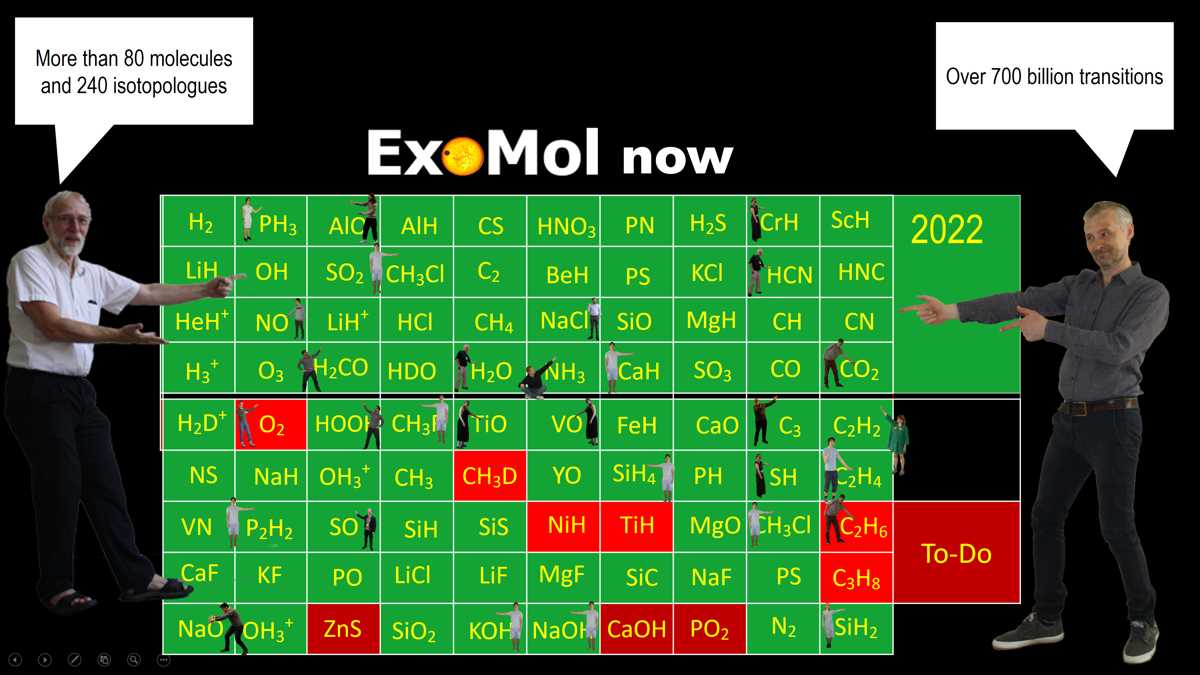
ExoMol database contains line lists for more than 80 molecules (240 isotopologues), 45 line lists have been generated by ExoMol, other line lists are taken from external sources or from our work predating the ExoMol project.
ExoMol database
Charles A. Bowesman et al., Mol. Phys., (2023).
Read paper at PCCP
Ryan Brady et al., MNRAS, 24, 24076 (2022).
Read paper at PCCP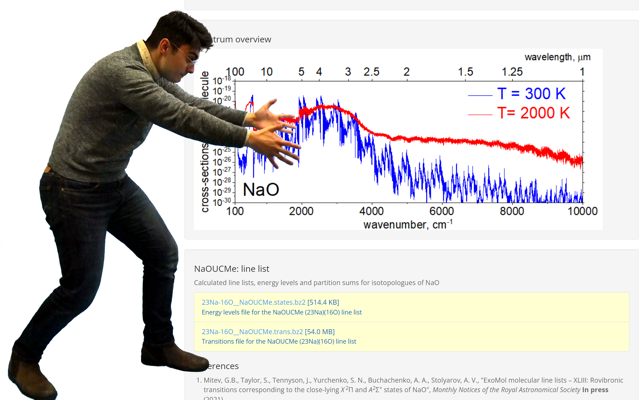
G.B. Mitev et al., MNRAS, 511, 2349 (2022).
Read paper at MNRAS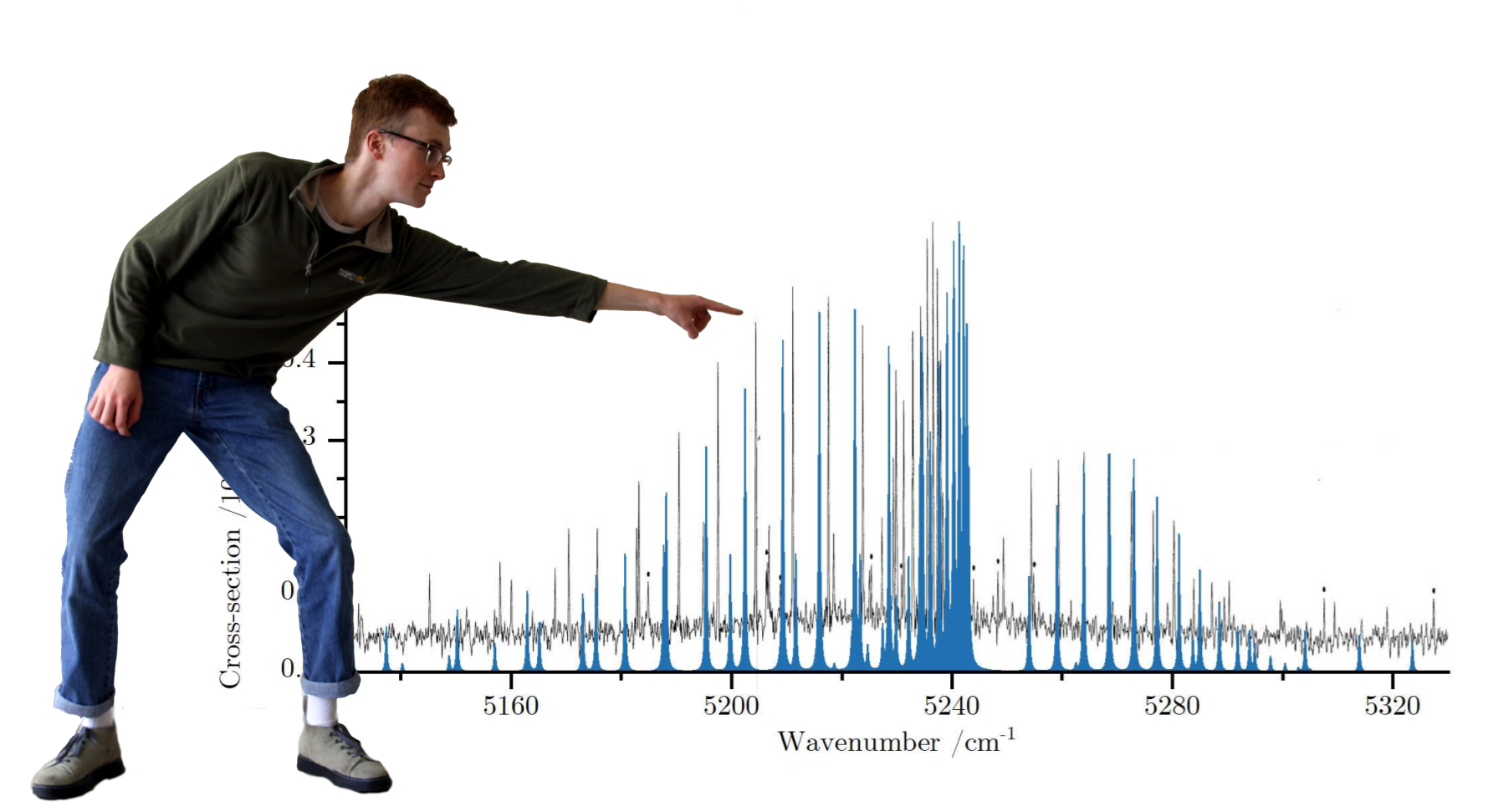
W. Somogyi, S. N. Yurchenko, and A. Yachmenev, JCP, 155, 214303 (2021).
Read paper at JCP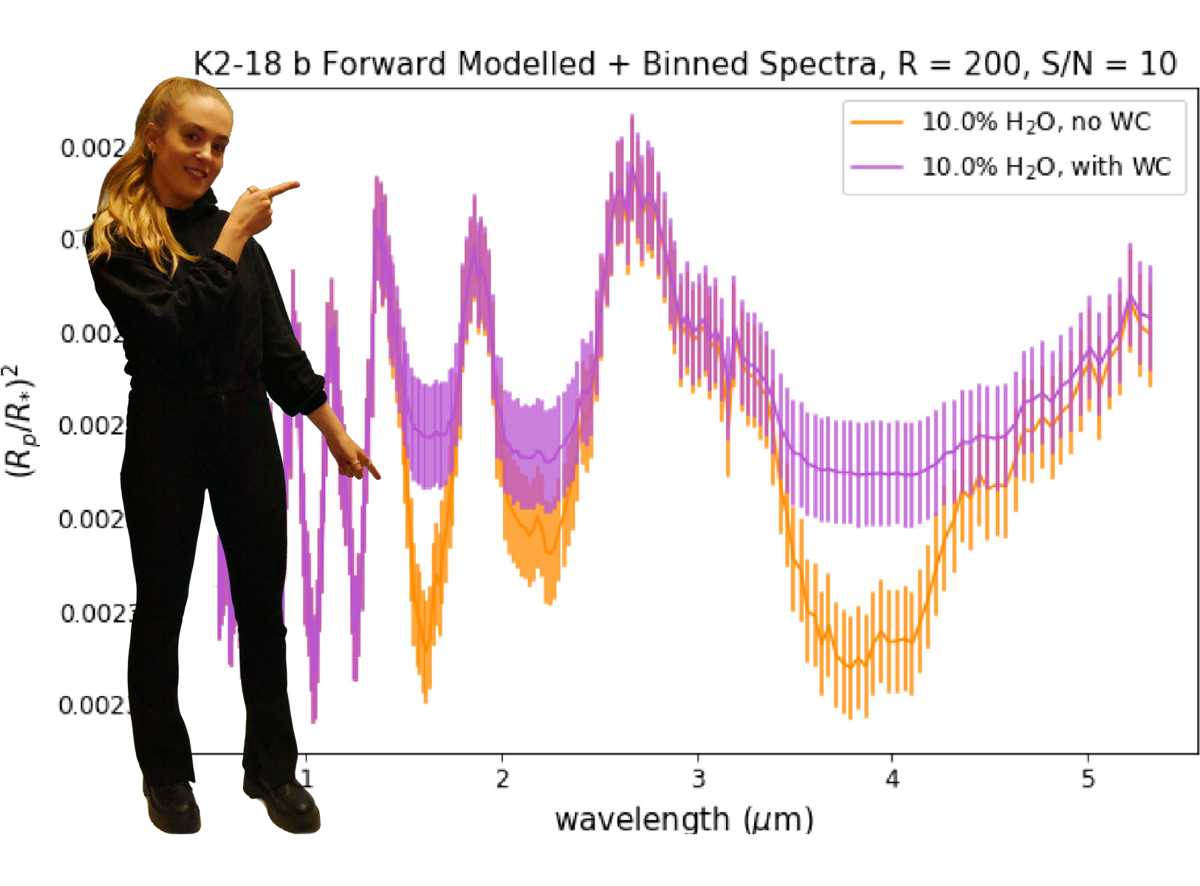
Lara O.Anisman et al., JQSRT (2021)
Read paper at JQSRT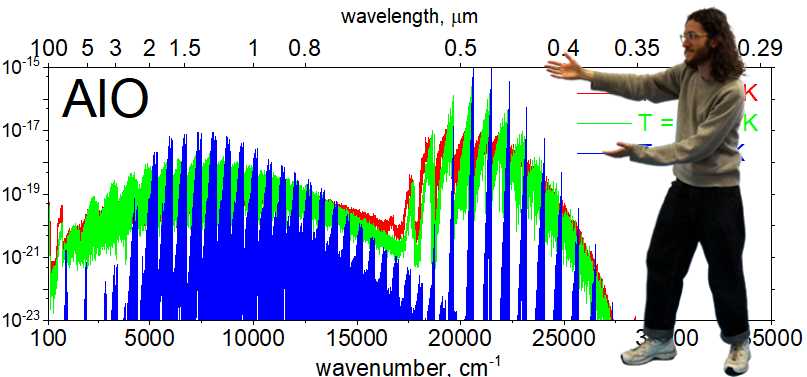
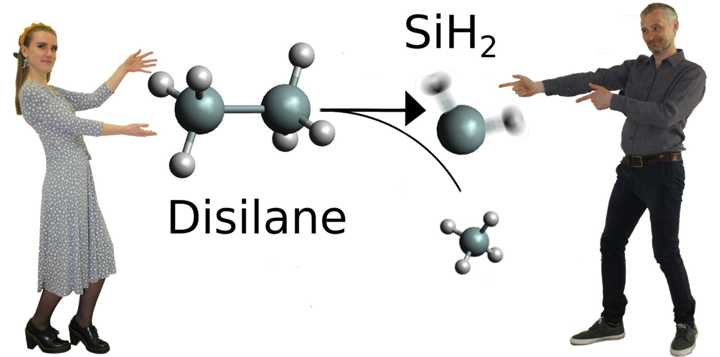
Victoria H.J. Clark and Sergei N Yurchenko, PCCP (2021)
Read paper at PCCP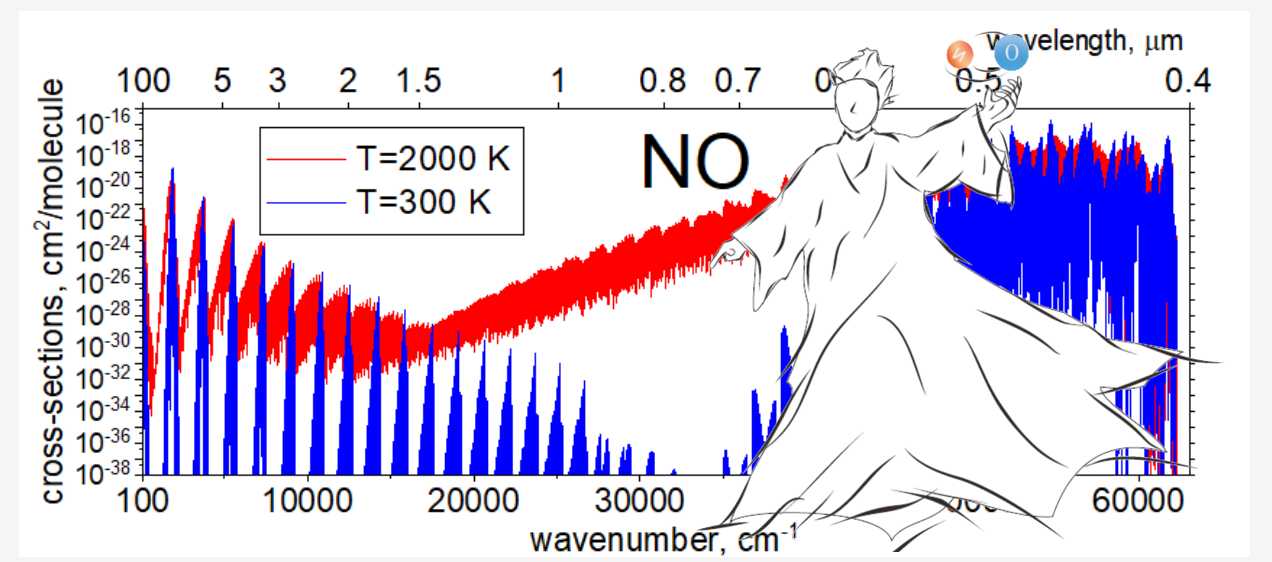
Qianwei Qu, Sergei N. Yurchenko, Jonathan Tennyson, MNRAS (2021)
Read paper at Arxiv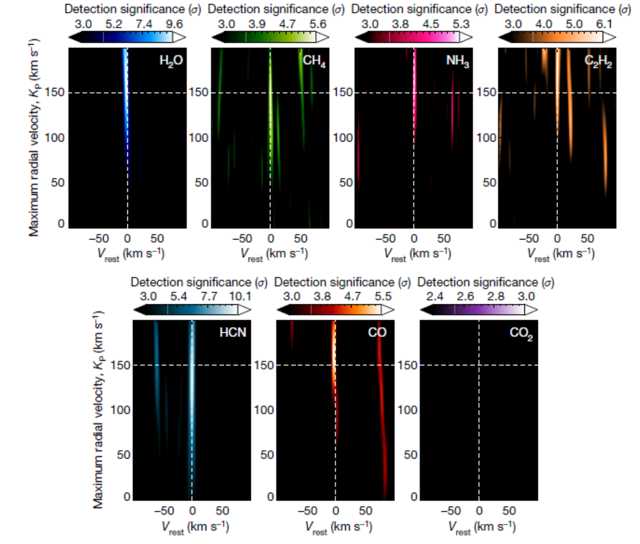
Paolo Giacobbe et al., Nature, 592, 205 (2021)
Read paper at Nature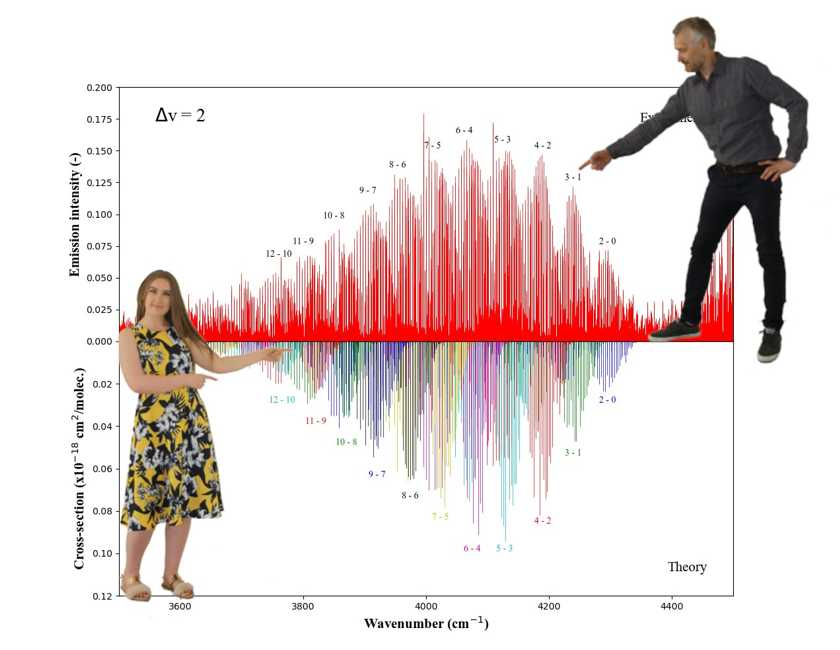
Adam Pastoreka, Svatopluk Civiš, Victoria H.J.Clark, Sergei N.Yurchenko, Martin Ferus, JQSRT, 262, 107521 (2021)
Read paper at JQSRT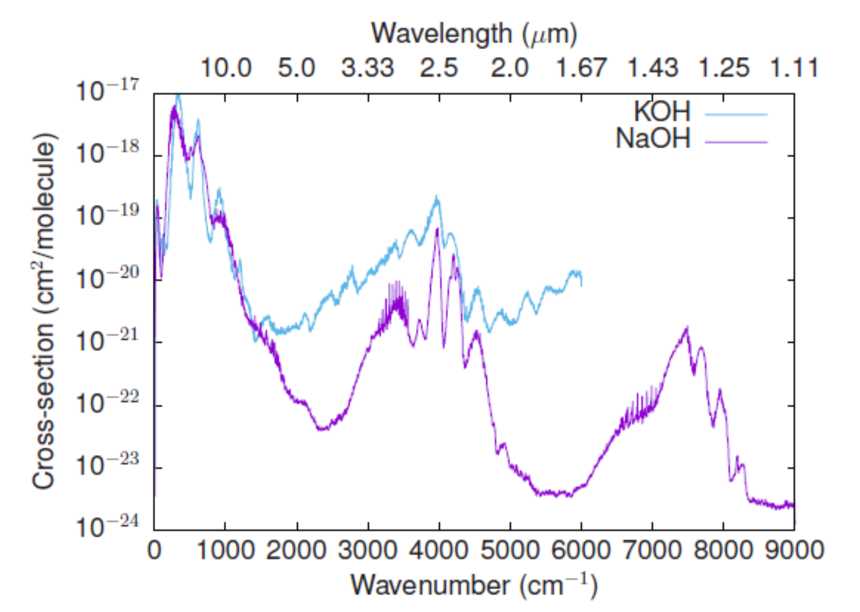
Alec Owens, Sergei N. Yurchenko and Jonathan Tennyson MNRAS, (2021)
Read paper at MNRAS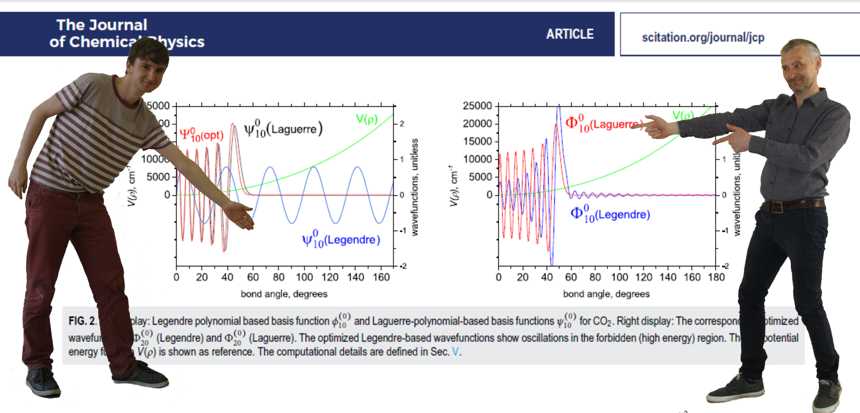
Sergei N. Yurchenko and Thomas M. Mellor, J. Chem. Phys. 153, 154106 (2020)
Read paper at JCP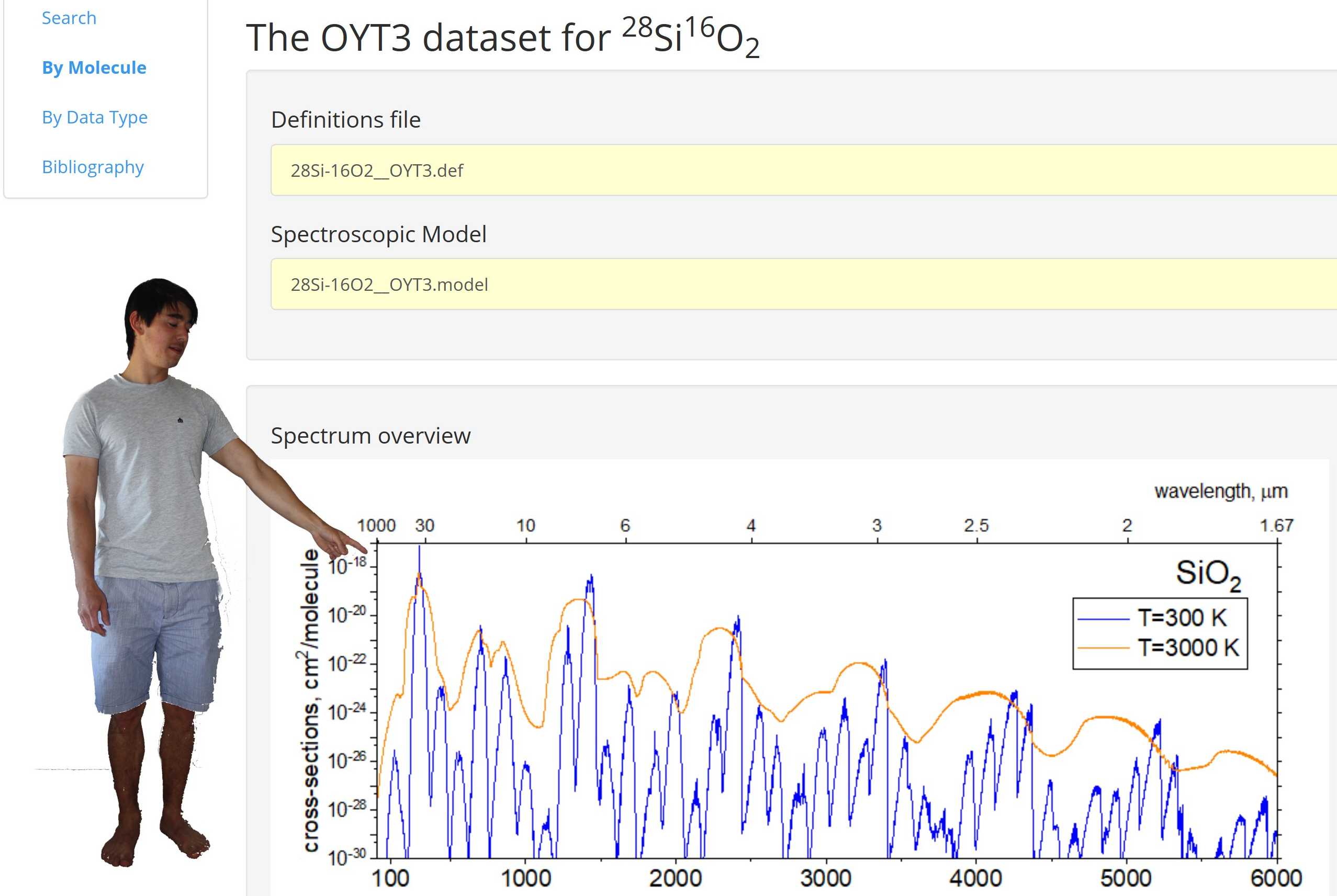
Alec Owens, Jonathan Tennyson and Sergei N. Yurchenko (2020)
Read paper at MNRAS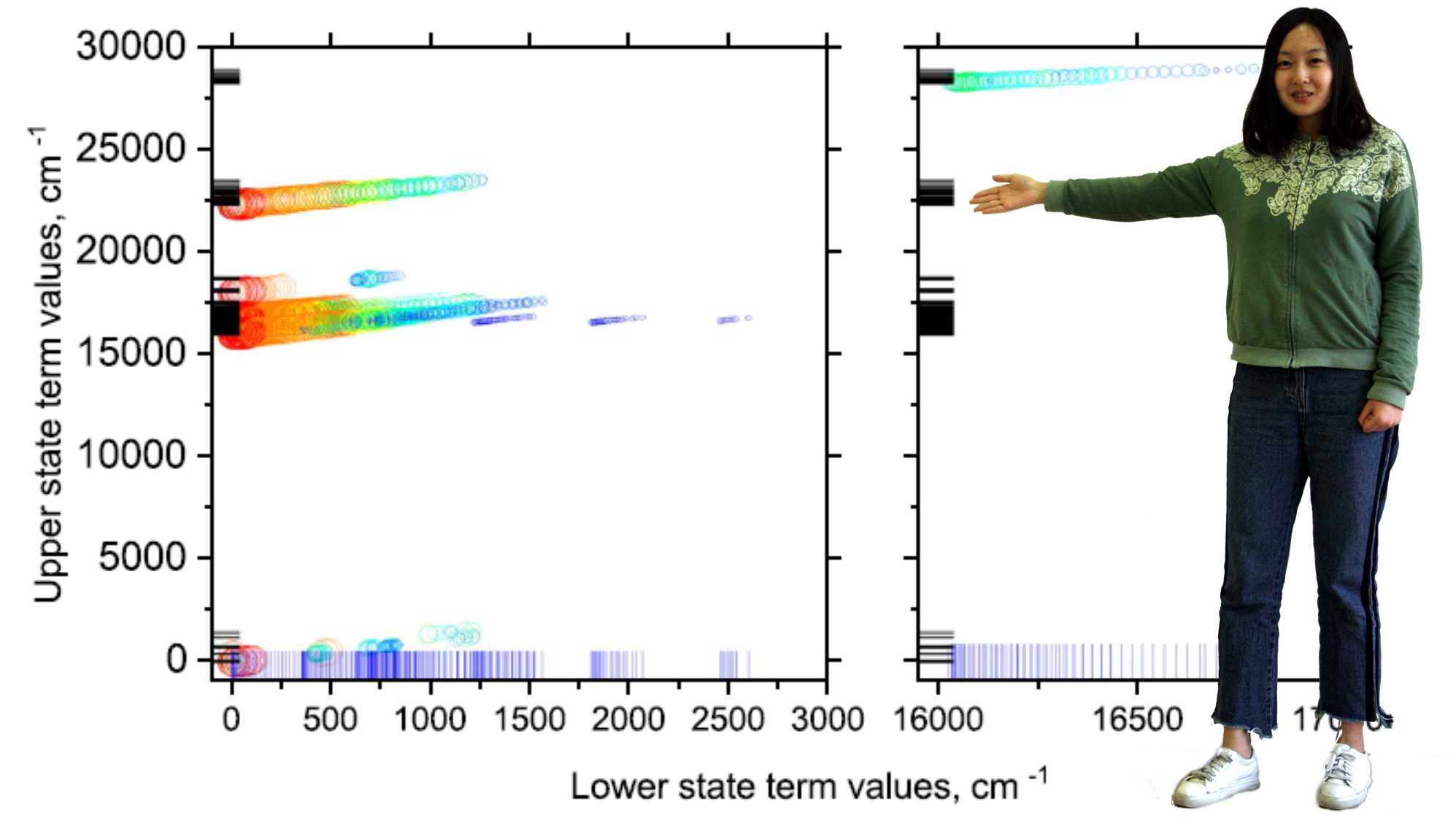
Alec Owens, Jonathan Tennyson and Sergei N. Yurchenko (2020)
Read paper at ApJS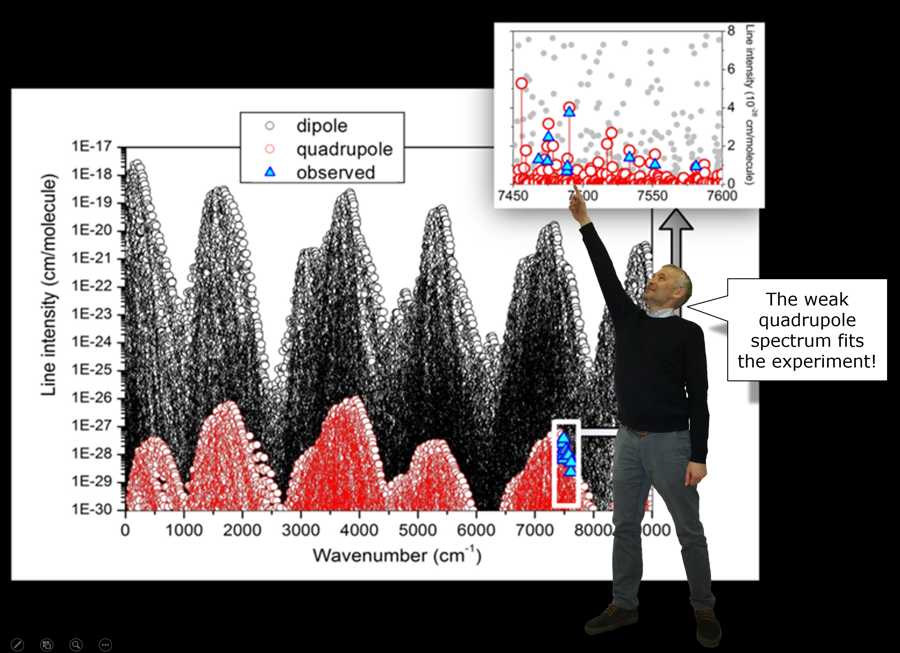
Alain Campargue, Samir Kassi, Andrey Yachmenev, Aleksandra A. Kyuberis, Jochen Küpper, and Sergei N. Yurchenko
Read paper at Phys. Rev. ResearchAlain Campargue, Alexaander M Solodov, Alexander A. Solodov, Andrey Yachmenev, and Sergey N Yurchenko
Read paper at PCCP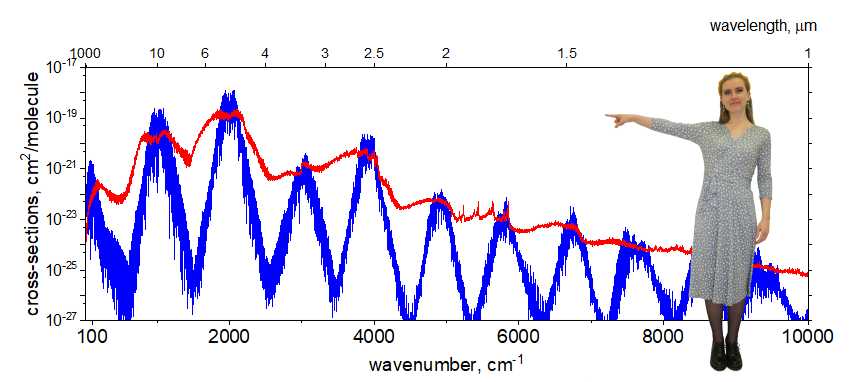
Victoria H.J. Clark, Alec Owens, Jonathan Tennyson and Sergei N. Yurchenko
Read paper at JQSRT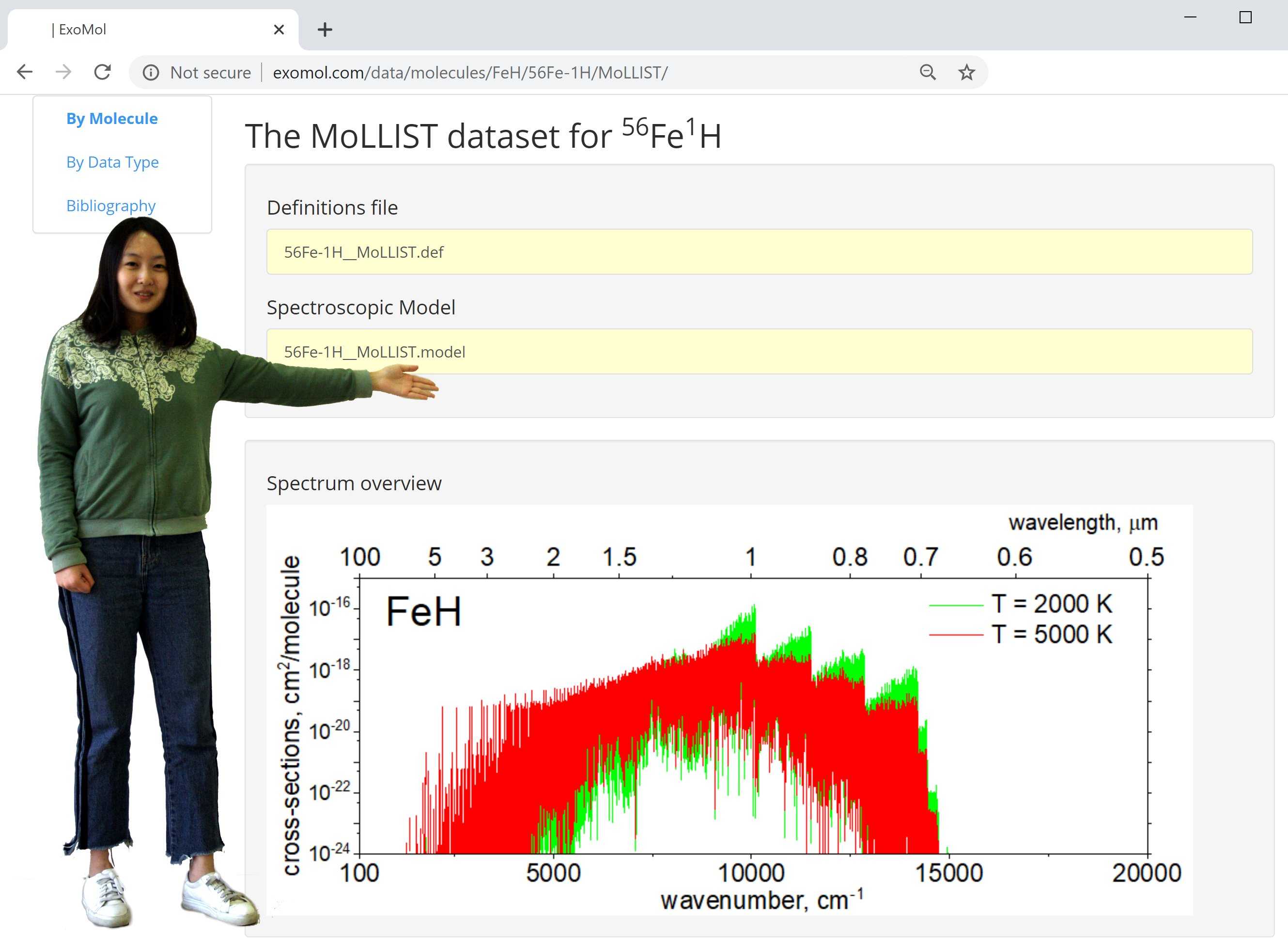
Yixin Wang, Jonathan Tennyson and Sergei N. Yurchenko
Read paper at Atoms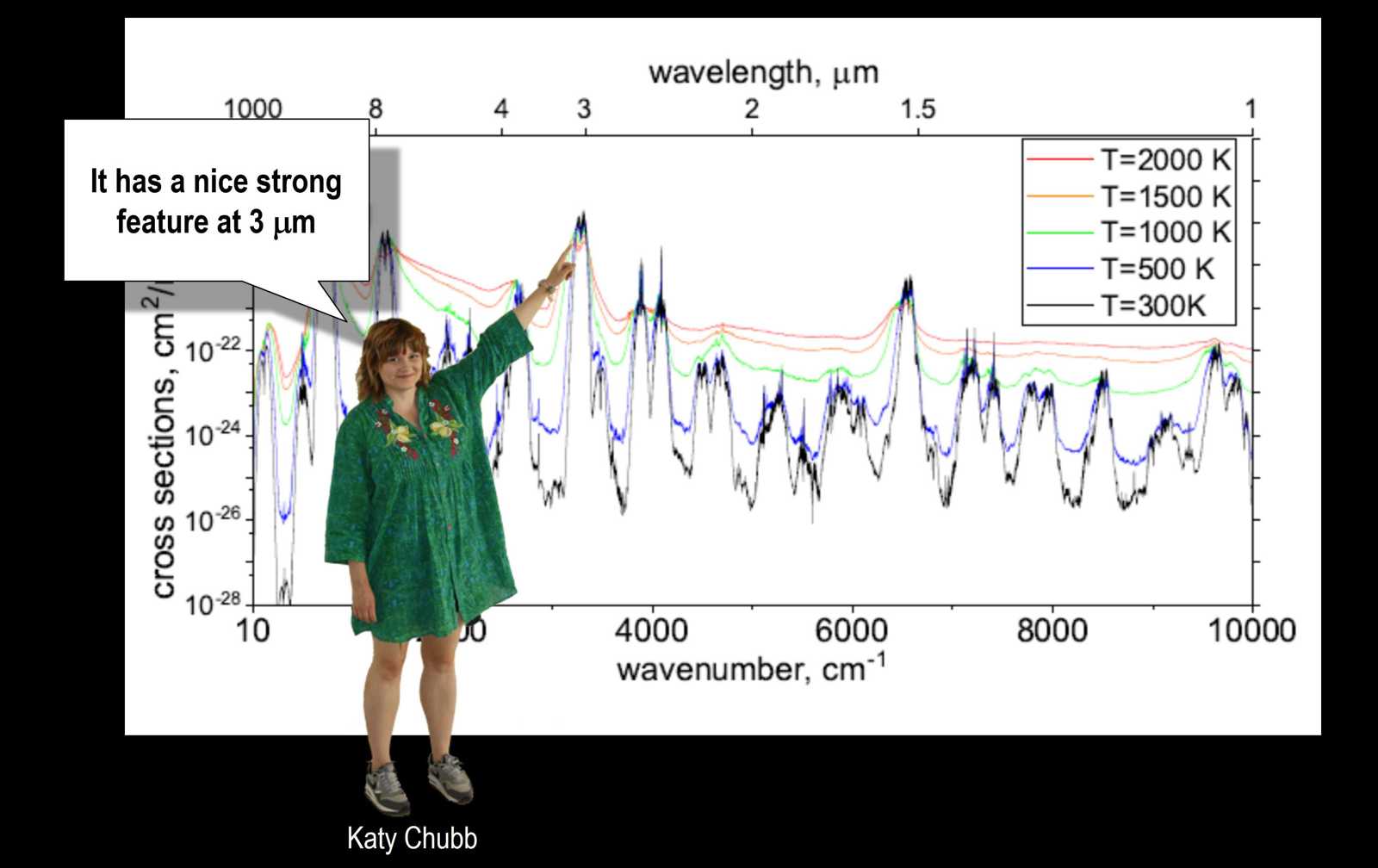
Katy L. Chubb, Jonathan Tennyson and Sergei N. Yurchenko
Read paper at MNRAS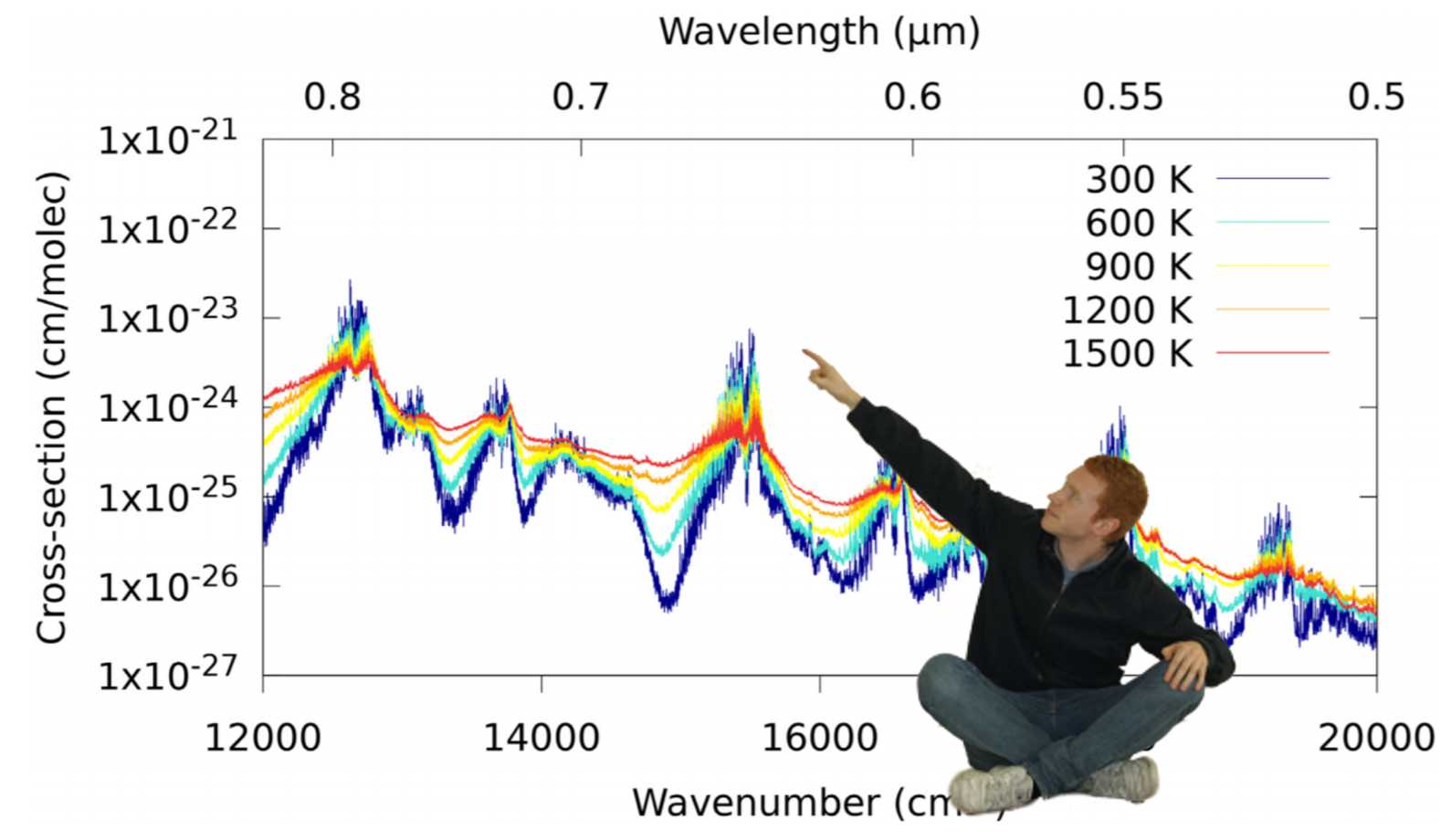
Phillip A. Coles, Sergei N. Yurchenko and Jonathan Tennyson
Read paper at MNRAS
Angelos Tsiaras, Ingo P Waldmann, Giovanna Tinetti, Jonathan Tennyson, and Sergey N Yurchenko.
Read paper at Nature Astronomy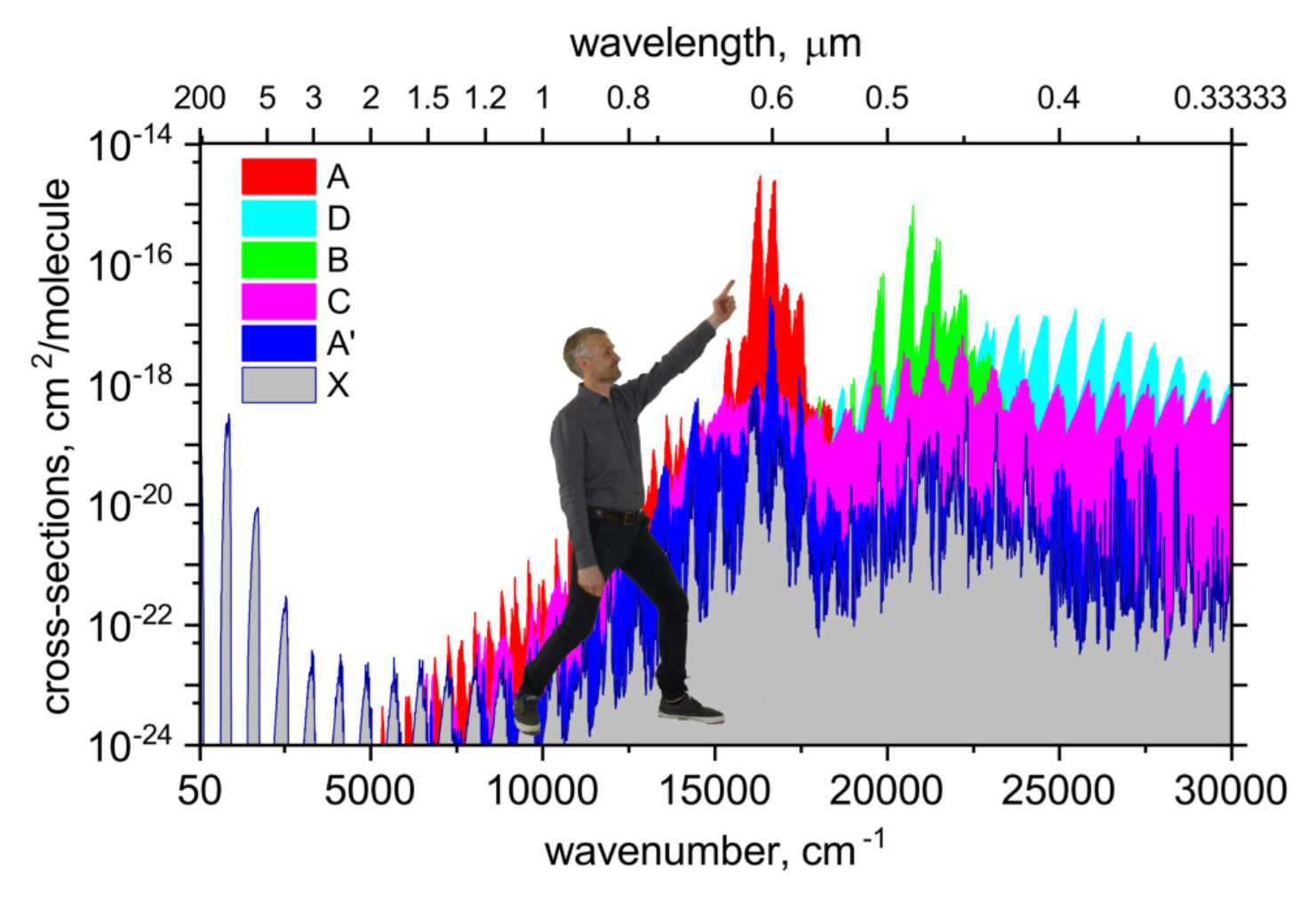
Alexander N. Smirnov, Victor G. Solomonik, Sergei N. Yurchenko and Jonathan Tennyson
Read paper at PCCP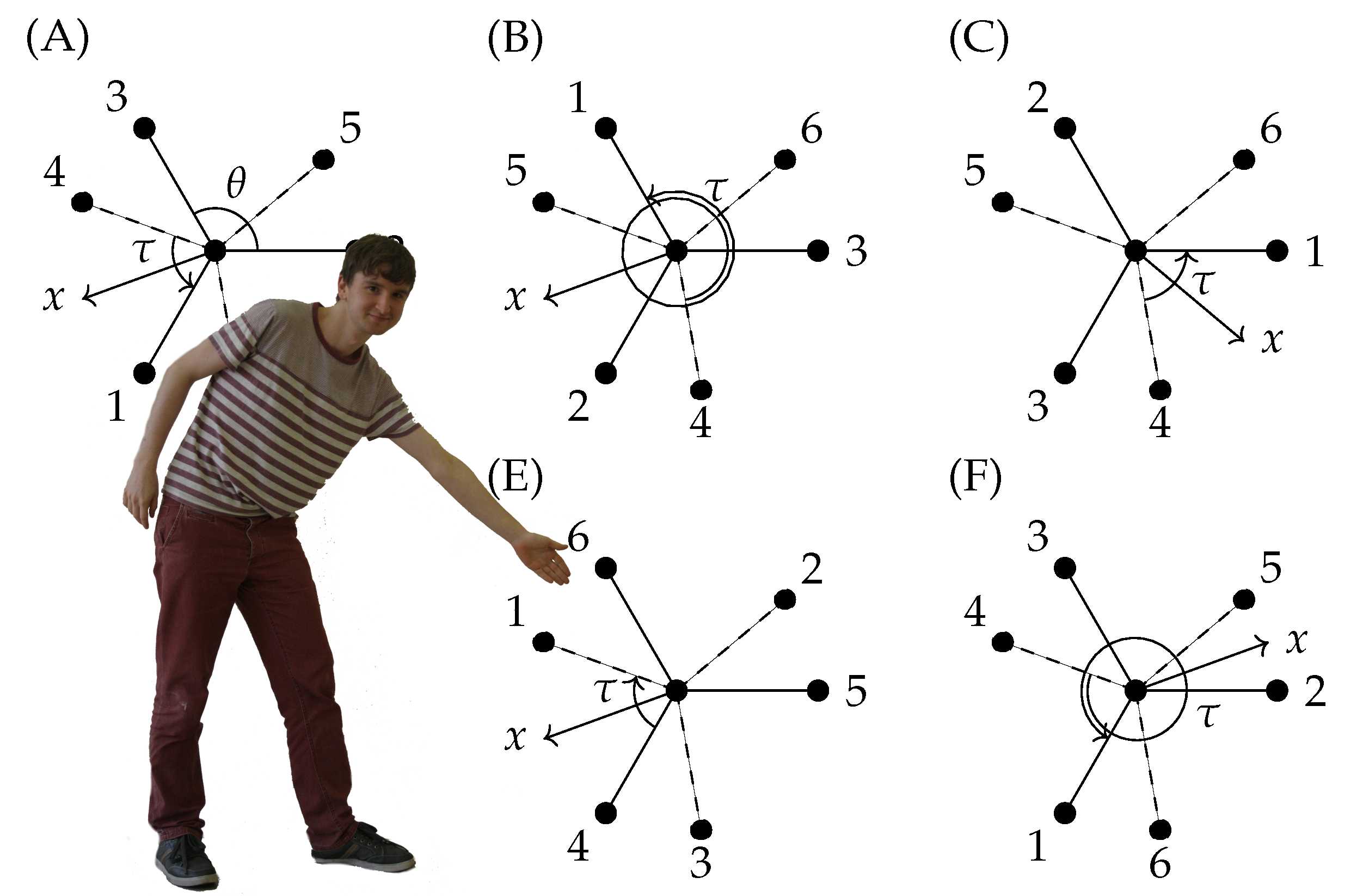
A detailed description of the symmetry properties of the ethane, with the aim of facilitating the variational calculations of rotation-vibration spectra is presented.
Read paper at MDPI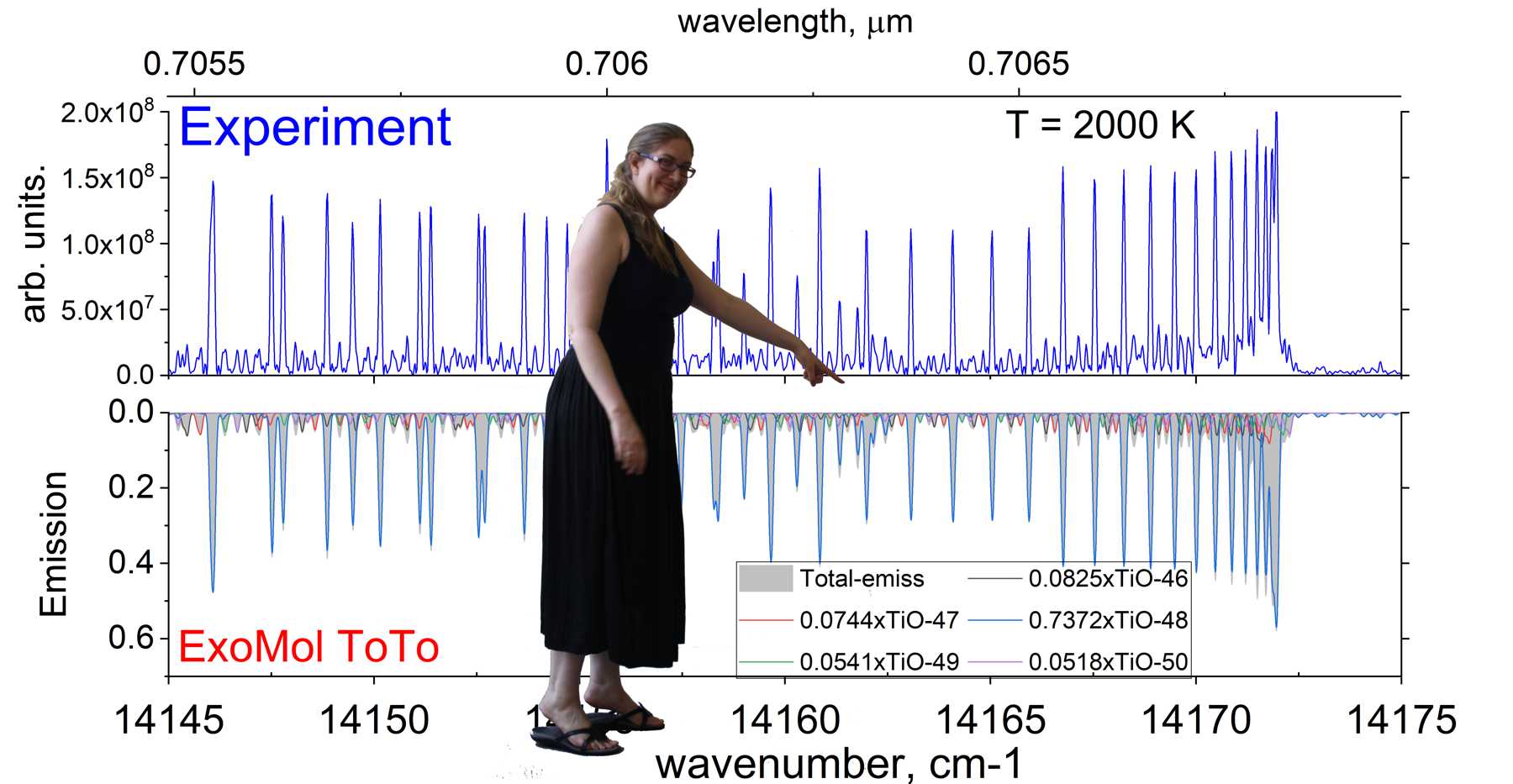
A new line database Toto for the main isotopologues of titanium oxide (TiO).
Read paper at MNRAS
The workshop focued on the data issues for atmospheric models of (exo-)planets (and cool stars) covering cross-sections, k-tables, super-lines, completeness, accuracy, (high-)resolutions, line-profiles and broadenings (both molecular and atomic), missing molecules, temperature/pressure ranges and grids as well as reaction rates, atmospheric chemistries, data formats and conversion scripts, program codes for processing the data etc.
See the website See Live Nones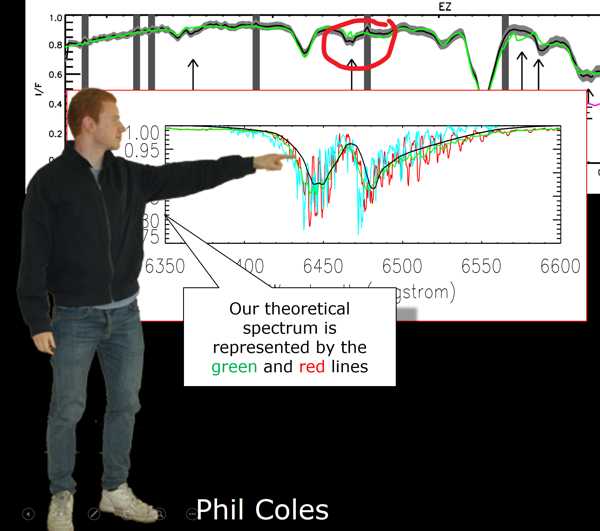
Patrick G.J. Irwin, Neil Bowlesa, Ashwin S. Braude, Ryan Garland, Simon Calcutt, Phillip A. Coles, Sergey N. Yurchenko, Jonathan Tennyson
The new Ammonina ExoMol-2018 data set (Coles et al., 2019) provides the most reliable ammonia absorption source for analysing low- to medium-resolution spectra of Jupiter in the visible/near-IR spectral range. This work is of significance not only for solar system planetary physics, but for future proposed observations of Jupiter-like planets orbiting other stars, such as with NASA’s planned Wide-Field Infrared Survey Telescope (WFIRST).
Read the paper at Icarus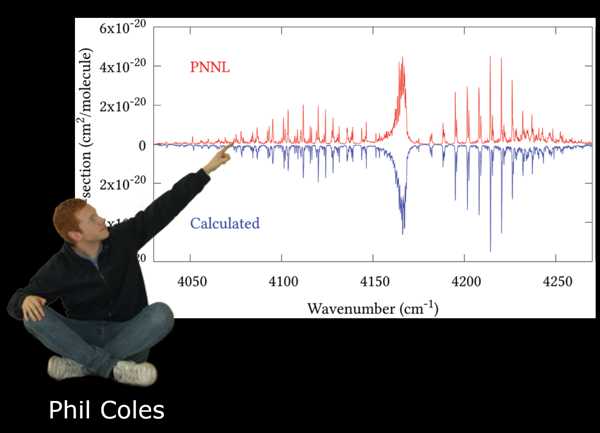
Phillip A. Coles, Sergei N. Yurchenko, Richard P. Kovacich, James Hobby and Jonathan Tennyson
A new ExoMol line list for Arsine is presented. Our calculated absorption cross-sections display good agreement with the main absorption features recorded in the Pacific Northwest National Laboratory (PNNL)
Read the paper at PCCP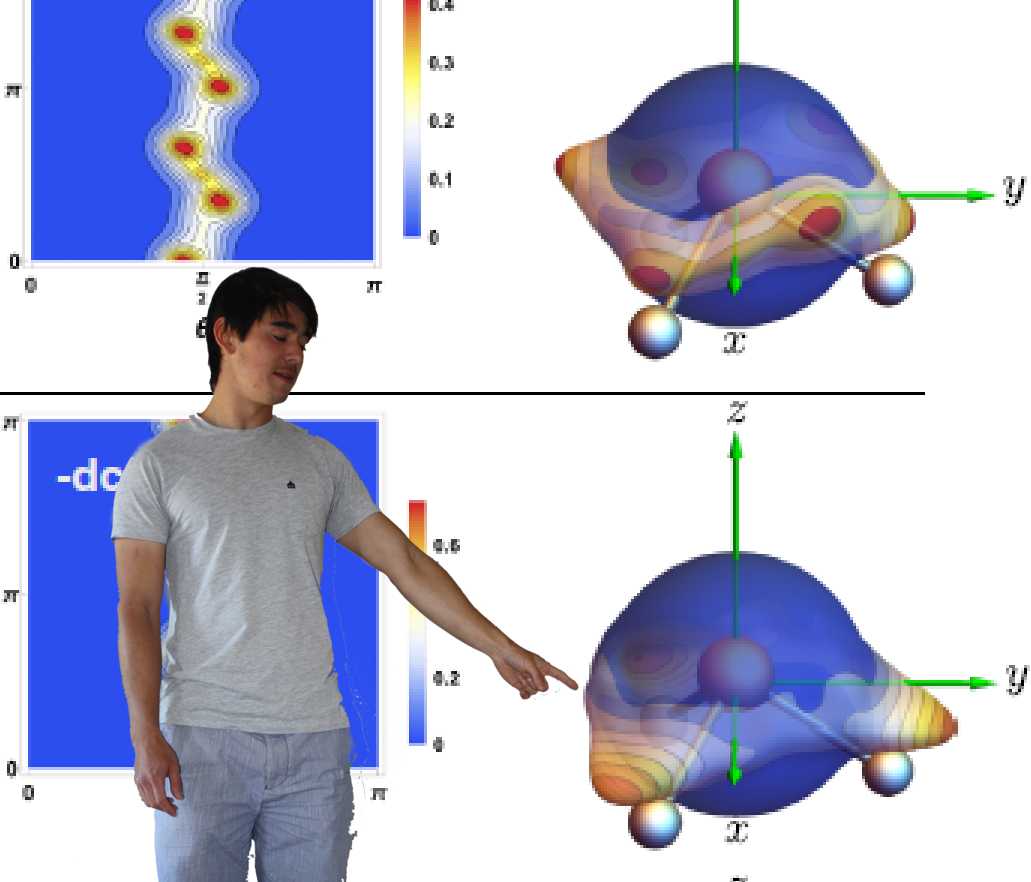
Alec Owens, Andrey Yachmenev, Sergei N. Yurchenko, Jochen Kuepper
Exploring the mystery of the molecular handedness in nature, scientists have proposed a new experimental scheme to create custom-made mirror molecules for analysis. The technique can make ordinary molecules spin so fast that they lose their normal symmetry and shape and instead form mirrored versions of each other.
Read the paper at PRL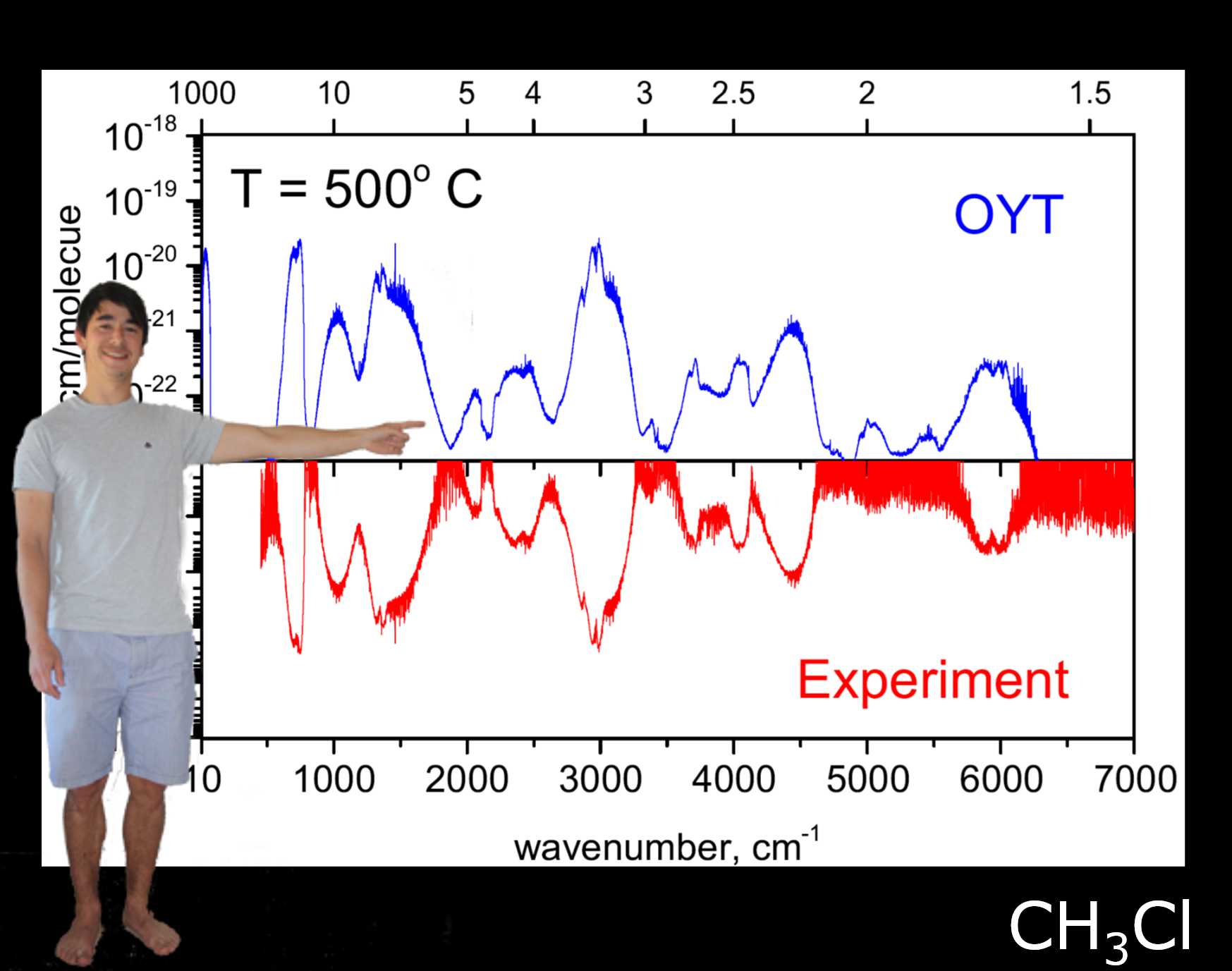
Comprehensive rotation-vibration line lists are presented for the two main isotopologues of methyl chloride, 12CH335Cl and 12CH337Cl. The line lists, OYT-35 and OYT-37, are suitable for temperatures up to T = 1200 K and consider transitions with rotational excitation up to J = 85 in the wavenumber range 0–6400 cm-1. Over 166 billion transitions between 10.2 million energy levels have been calculated variationally for each line list using a new empirically refined potential energy surface, and an established ab initio dipole moment surface. The OYT line lists show excellent agreement with newly measured high-temperature infrared absorption cross-sections, reproducing both strong and weak intensity features across the spectrum. The line lists are available from the ExoMol database and the CDS database.
Read the paper at MNRAS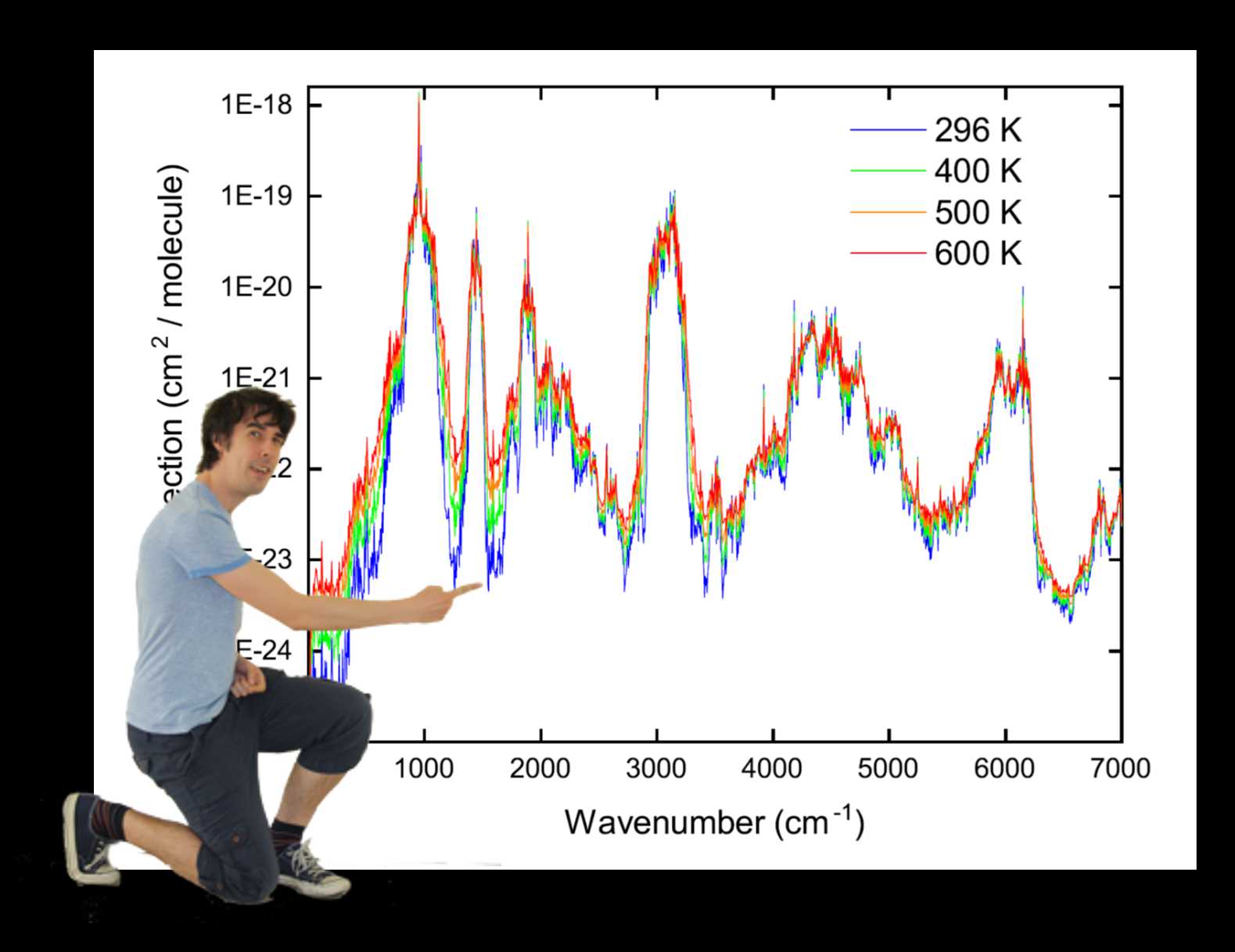
Barry P. Mant, Andrey Yachmenev, Jonathan Tennyson and Sergei N. Yurchenko
A new line list for ethylene, 12C2H4 is presented. The line list is based on empirical potential energy and high level ab initio dipole moment surfaces. The line list covers the range up to 7000 cm-1 with all ro-vibrational transitions (50 billion) and thus should be applicable for temperatures up to 700~K. A cheap but reasonably technique for computing molecular opacities from vibrational band intensities is proposed and used to provide temperature dependent cross sections of ethylene for shorter wavelength and higher temperatures.
Read paper at MNRAS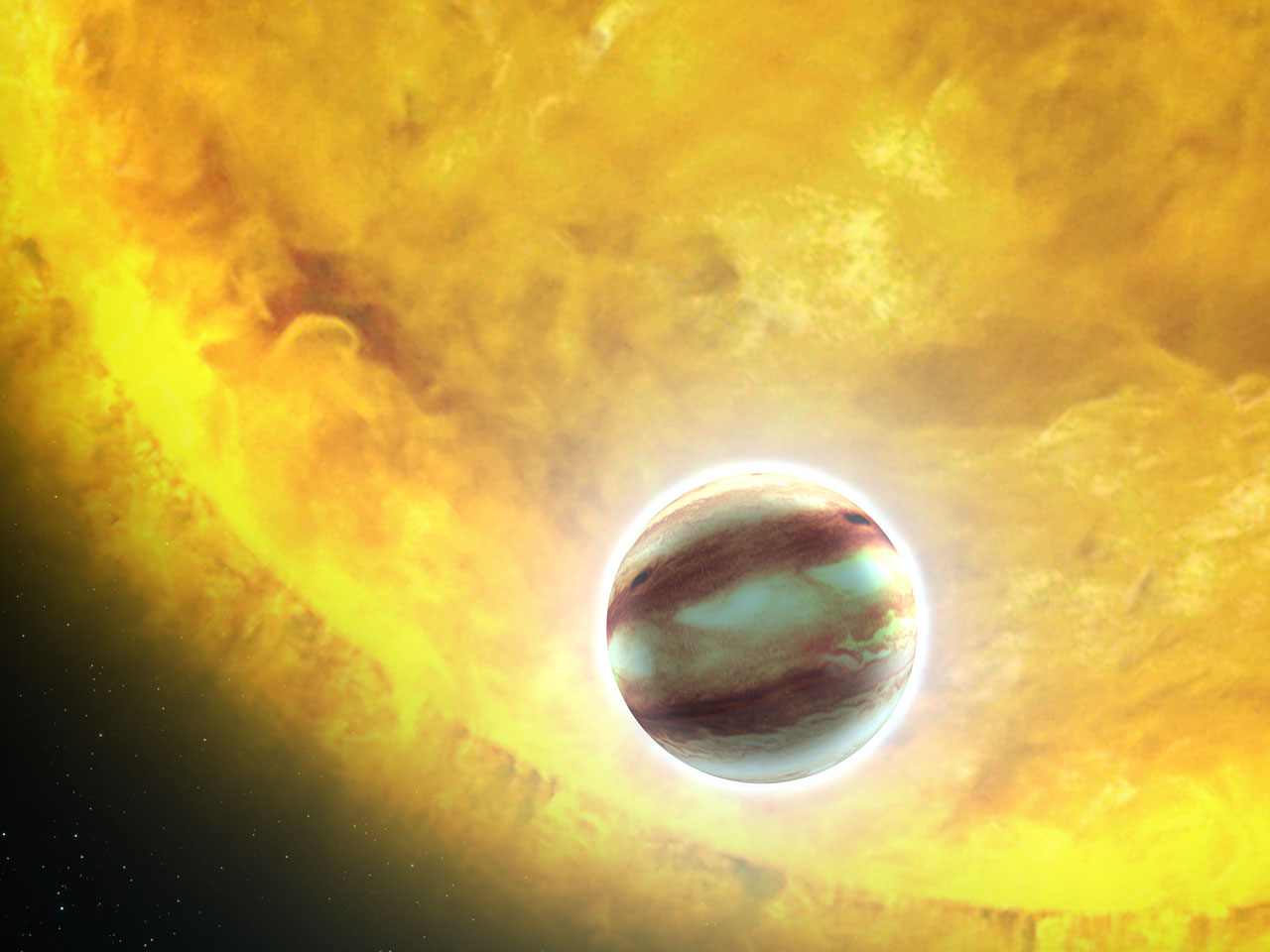
A powerful new model to detect life on planets outside of our solar system, more accurately than ever before, has been developed by UCL researchers.
UCL Press release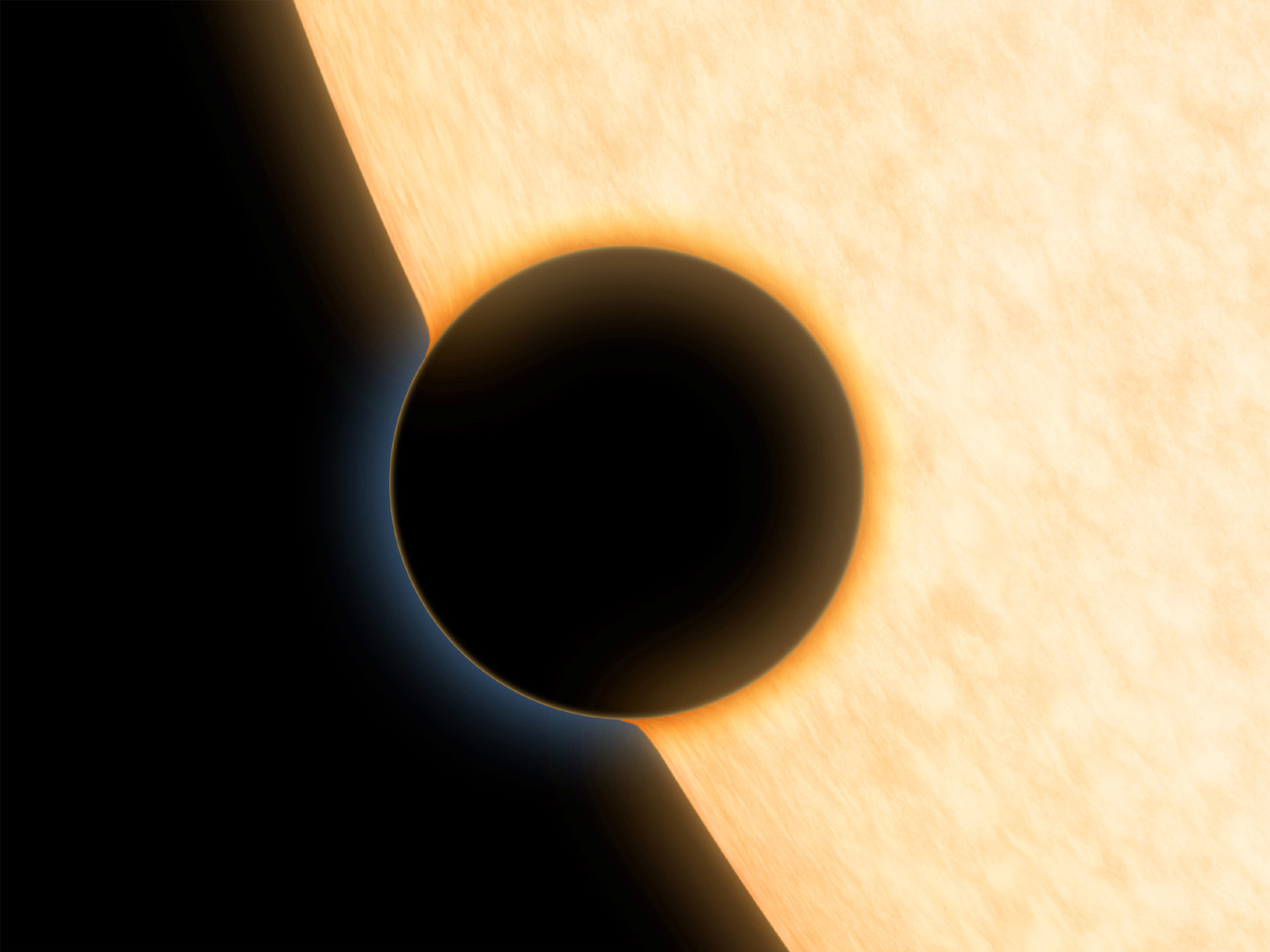
HPC Developing a huge library of spectra and using them to model accurately the atmospheres of exoplanets tens, hundreds or perhaps thousands of light years away is a phenomenally complex undertaking
Showcase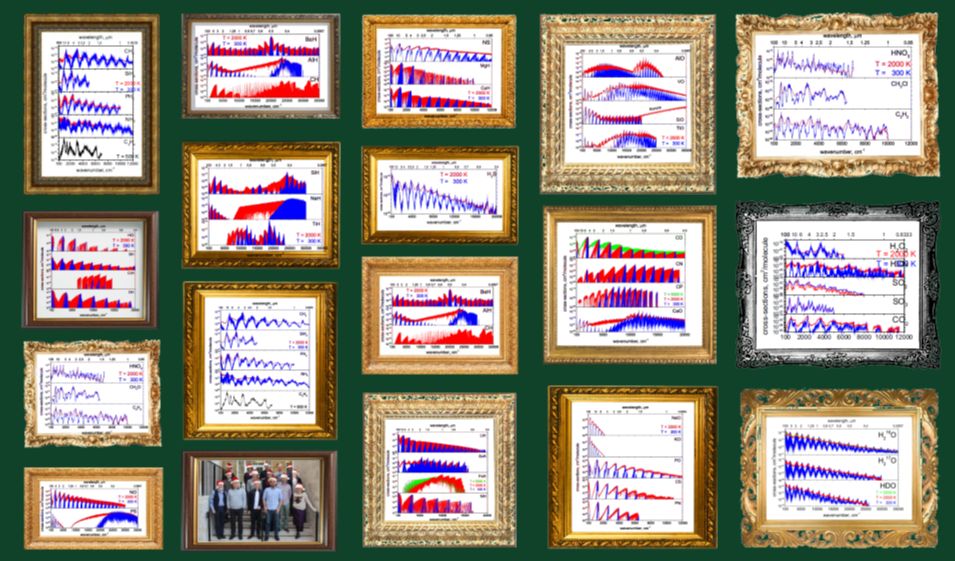
An overview of the line lists generated by ExoMol thus far is presented in [Tennyson and Yurchenko, Atoms, 6, 26], where further molecular data needs are also discussed.
ExoMol Atlas
Applications, ideas, developments, collaborations.
See Website
Sergei N. Yurchenko , Ahmed F. Al-Refaie, and Jonathan Tennyson, AA 614, A131 (2018)
S. N. Yurchenko, F. Sinden, L. Lodi, Ch. Hill, M. N. Gorman, and J. Tennyson, MNRAS 473, 5324 (2018)
Alec Owen's paper in MNRAS is editor's choice.