Research in the Kessaris Lab
We study neuronal development from embryonic neural stem cells focusing on neuronal subtypes generated from subpallial precursors in the embryo. We examine the genetic basis of neuronal subtype specification, migration, differentiation and circuit integration. Using genetic manipulation in mice, we fate-map precursor cells, tag and purify stem cells and their progeny in order to identify genes involved in their development. We manipulate gene function using loss- and gain-of-function approaches and assess the physiological and behavioural consequences. Our work is aimed at understanding normal development and the contribution of abnormalities to neurodevelopmental disorders.
Cortical Interneuron Development and Contribution to Neurodevelopmental Disorders
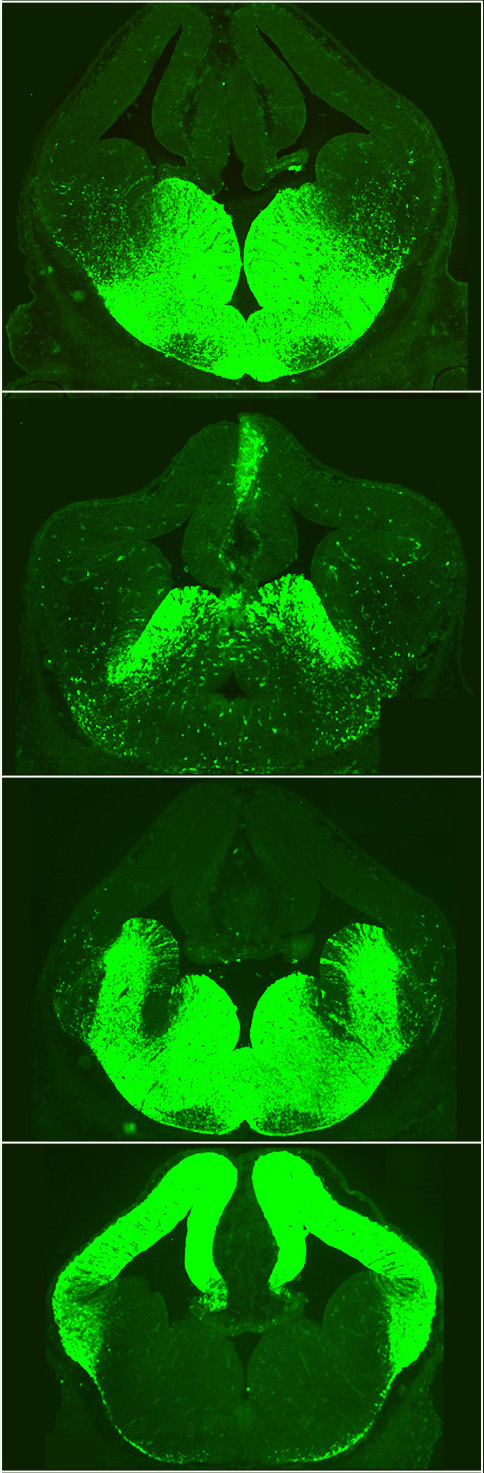
Interneurons in the adult cortex represent a heterogeneous population of cells in terms of morphology, neurochemical and physiological properties. It is unknown how this diversity arises, what the significance of the diversity is and what the function of these interneuron subtypes might be in cortical circuits. Using genetic fate-mapping approaches we labelled molecularly distinct precursor cells and identified their neuronal progeny. This enabled us to map the embryonic origins of cortical interneurons and provided us with tools to further manipulate their function. We demonstrated that interneuron diversity is specified to a large extent during embryogenesis and, unlike projection neurons of the cortex which are generated from resident cortical precursors, interneurons are generated from distant neuroepithelial stem cells in the ventral telencephalon and migrate long distances to reach the cortex. We are assessing the molecular basis of interneuron number regulation and subtype specification using genetic tools. As cortical interneurons have been implicated in seizure-based and neurodevelopmental disorders such as autism spectrum disorders we are examining the contribution of interneuron dysfunction to such disorders using a range of behavioural assays.
Last updated August 2017