Formation and metabolism of ammonia
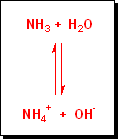 Ammonia,
as the ammonium ion, is the main immediate product of amino acid metabolism,
arising as a result of oxidative deamination of amino acids, catalysed by glutamate
dehydrogenase and glycine oxidase, linked to the transamination of a wide variety
of other amino acids.
Ammonia,
as the ammonium ion, is the main immediate product of amino acid metabolism,
arising as a result of oxidative deamination of amino acids, catalysed by glutamate
dehydrogenase and glycine oxidase, linked to the transamination of a wide variety
of other amino acids.
Small aquatic organisms can excrete ammonium directly into their environment;
fish excrete some 60% of their nitrogenous waste as ammonium ions and the remainder
as trimethylamine oxide.
Earthworms, which have a large surface to volume ratio, excrete a considerable
part of their nitrogenous waste as ammonia gas.
Ammonium is highly toxic, and terrestrial organisms need to form a less toxic
end-product of nitrogen metabolism.
 If water is
a problem, as for birds and insects, then the main end-product is uric acid,
which is relatively insoluble in water, and can be excreted as a slurry of crystals
(by birds) or even as dry crystals (by many insects). This is obviously important
in the egg, where there is little water available for storing a soluble nitrogenous
end-product, but for adult birds the weight of water required to excrete a soluble
metabolite also poses problems. Animals that excrete uric acid are termed uricotelic.
If water is
a problem, as for birds and insects, then the main end-product is uric acid,
which is relatively insoluble in water, and can be excreted as a slurry of crystals
(by birds) or even as dry crystals (by many insects). This is obviously important
in the egg, where there is little water available for storing a soluble nitrogenous
end-product, but for adult birds the weight of water required to excrete a soluble
metabolite also poses problems. Animals that excrete uric acid are termed uricotelic.
 Bats and
arachnids excrete guanine as their main nitrogenous end-product; such animals
are known as purinotelic.
Bats and
arachnids excrete guanine as their main nitrogenous end-product; such animals
are known as purinotelic.
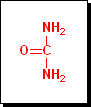 Mammals, for
whom water balance and weight are not generally a problem, excrete most of their
nitrogenous waste as urea, which is water-soluble; such animals are termed ureotelic.
Mammals, for
whom water balance and weight are not generally a problem, excrete most of their
nitrogenous waste as urea, which is water-soluble; such animals are termed ureotelic.
In this program you will investigate the synthesis of urea by isolated liver
cells - you will be repeating the experiments that Krebs and Henseleit carried
out when they deduced the pathway in the 1930s.
You may enjoy reading an essay by Krebs called "The discovery of the ornithine
cycle of urea synthesis",
Krebs HA (1973) Biochemical Education 1: 19-23.